Scoliosis Treatment Without Surgery: The Complete Guide
Your scoliosis is not a structural problem. It is a nervous system problem wearing a structural disguise.
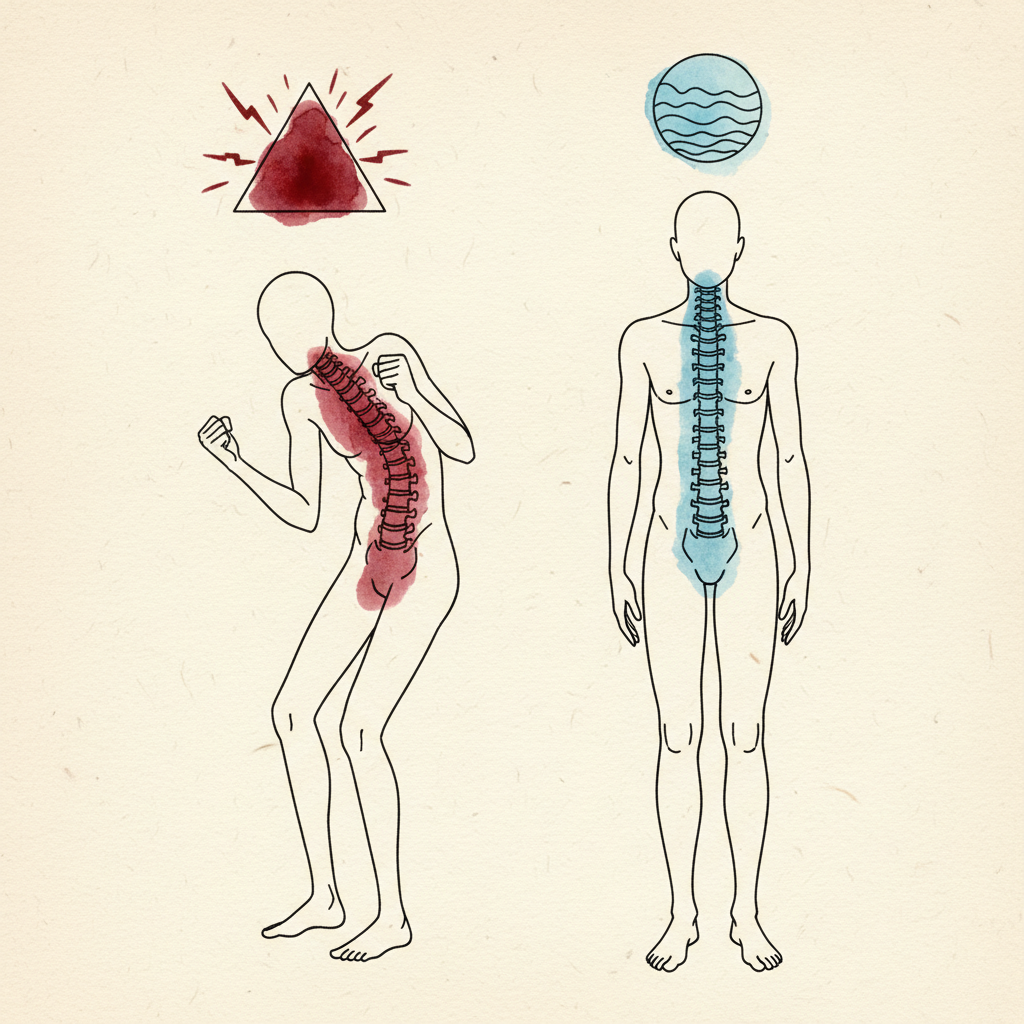
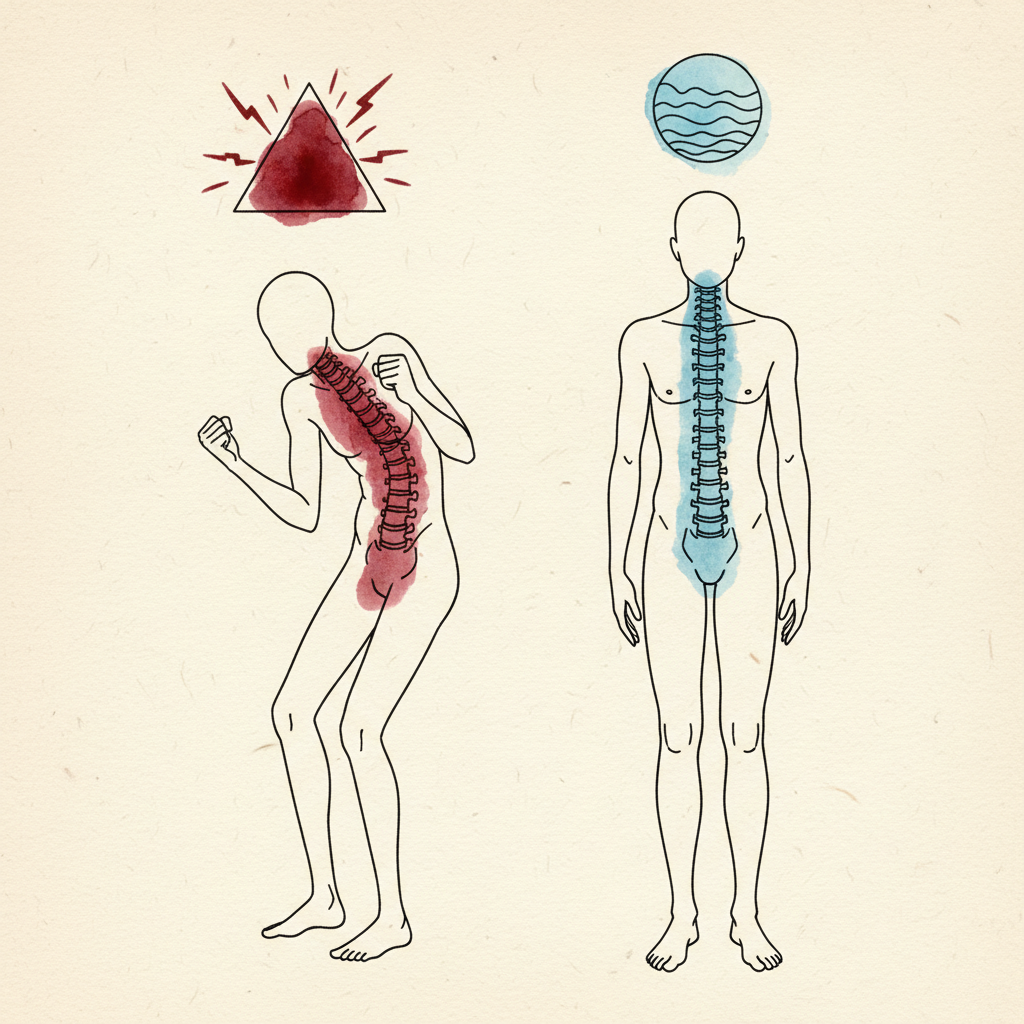
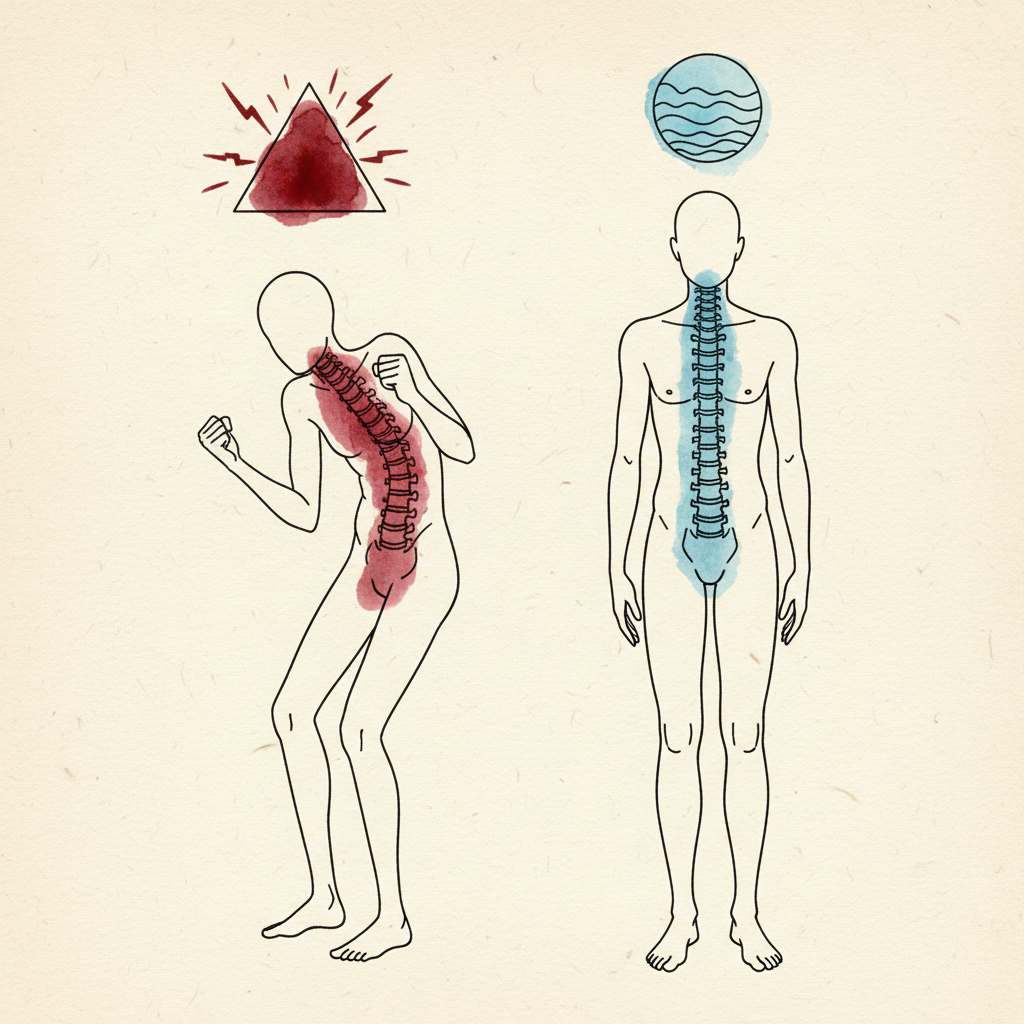
That single distinction changes what treatment means, what it targets, and why everything you have tried so far stopped working.
The conventional model treats the curve as a mechanical defect. Brace it. Strengthen around it. Stretch the short side. Fuse it if it gets bad enough. This model treats your spine like a bent pole that needs straightening.
But your spine is not a pole. It is an output. The output of a living prediction your brain runs every second of every day, based on an internal model called the [body schema](/body-schema-posture-how-brain-controls).
The body schema is your brain’s non-conscious map of your body in space. It is not what you see in the mirror. It is not what you think your posture looks like. It is the sensorimotor model that generates your posture before you are aware of it [2]. Neurologist Jacques Paillard established this distinction: the schema operates below consciousness, generating the motor commands that position your body in gravity.
In scoliosis, this model generates the lateral curve as its best available prediction given the sensory data it has received over years. The curve is not random. It is not a manufacturing defect. It is a solution your nervous system built to a problem it detected.
I was diagnosed with an [85-degree S-curve](/85-degree-scoliosis-no-surgery) at 18. I spent the next 20 years finding what works when conventional treatment has failed. I have written about my own journey elsewhere. What matters here is the principle I discovered inside it: treatment that targets the prediction changes the curve. Treatment that targets only the curve changes nothing permanently.
This guide is the complete map of non-surgical scoliosis treatment built on that principle.
Why Conventional Scoliosis Treatment Stalls
The standard conservative treatment sequence for scoliosis follows a predictable path. Observation. Physical therapy. Bracing. And if the curve progresses past a threshold, surgery.
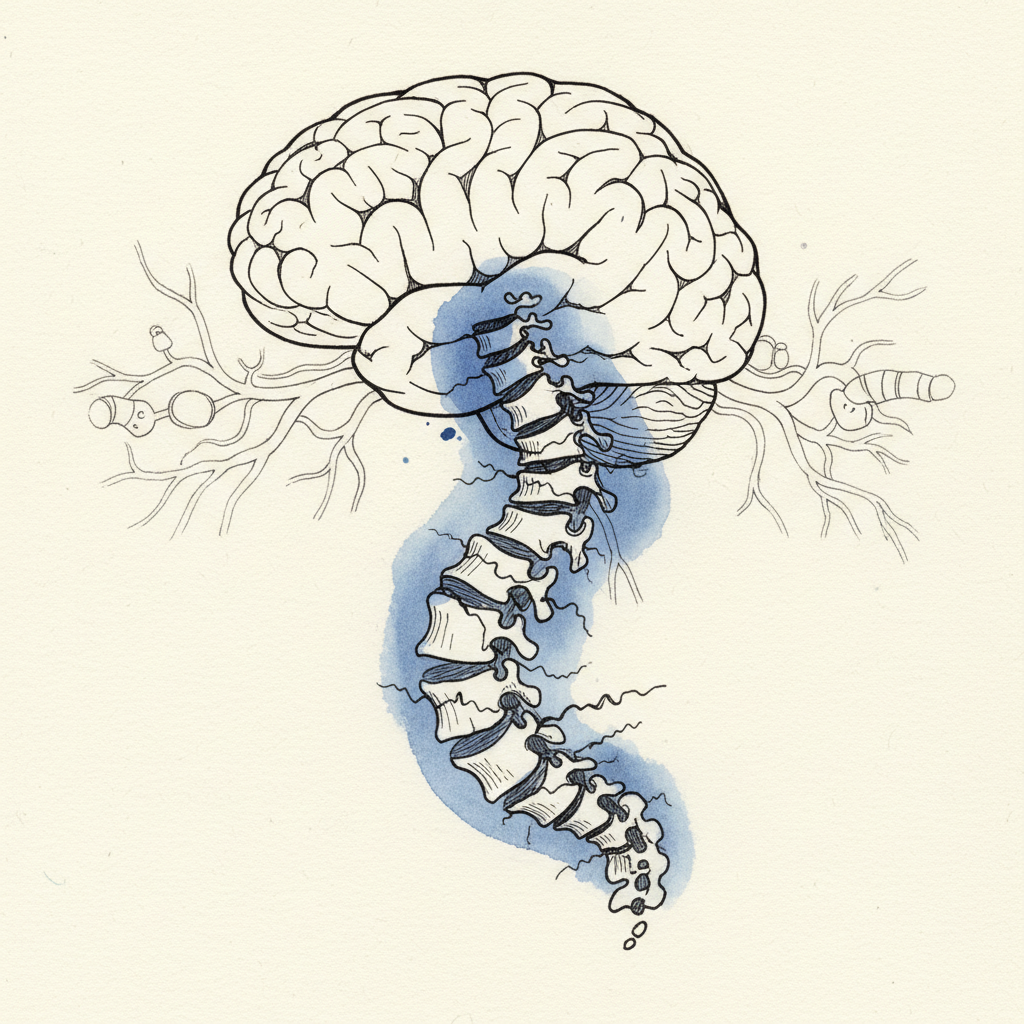
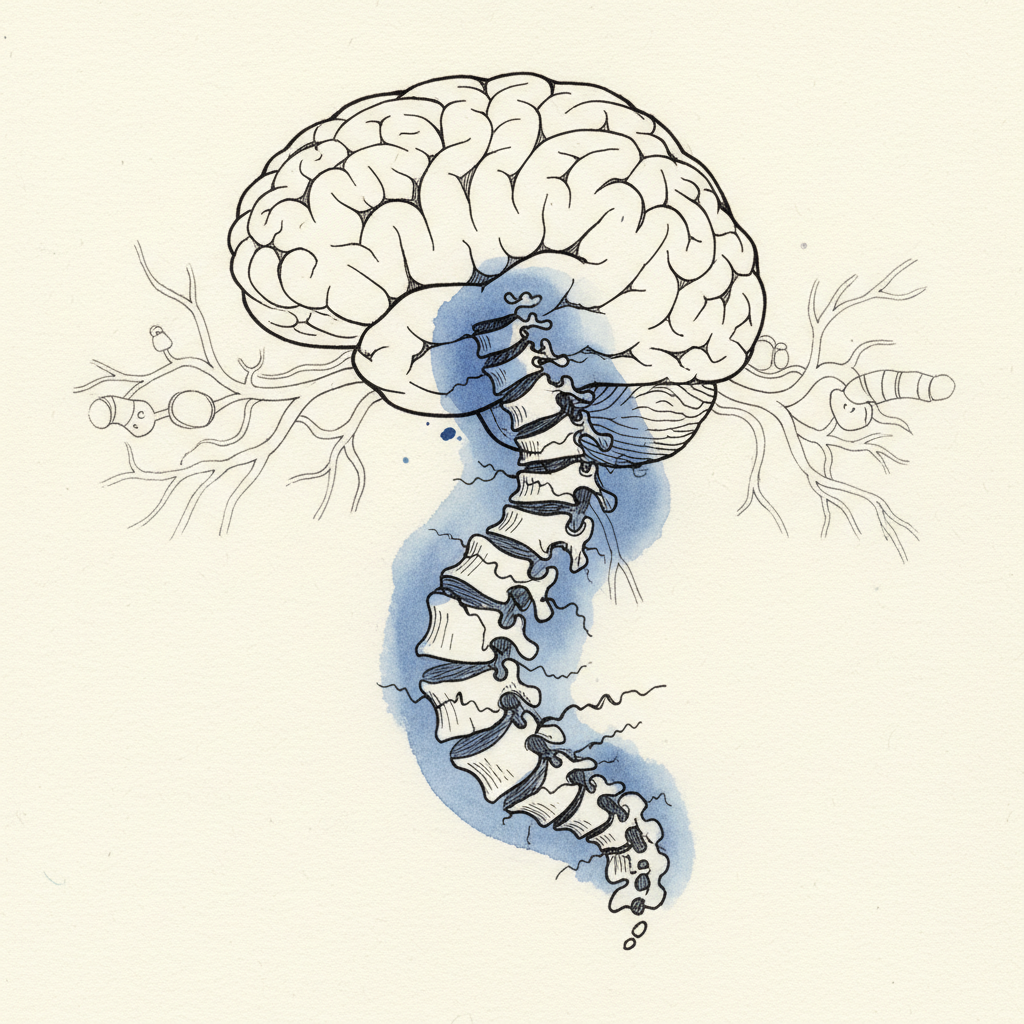
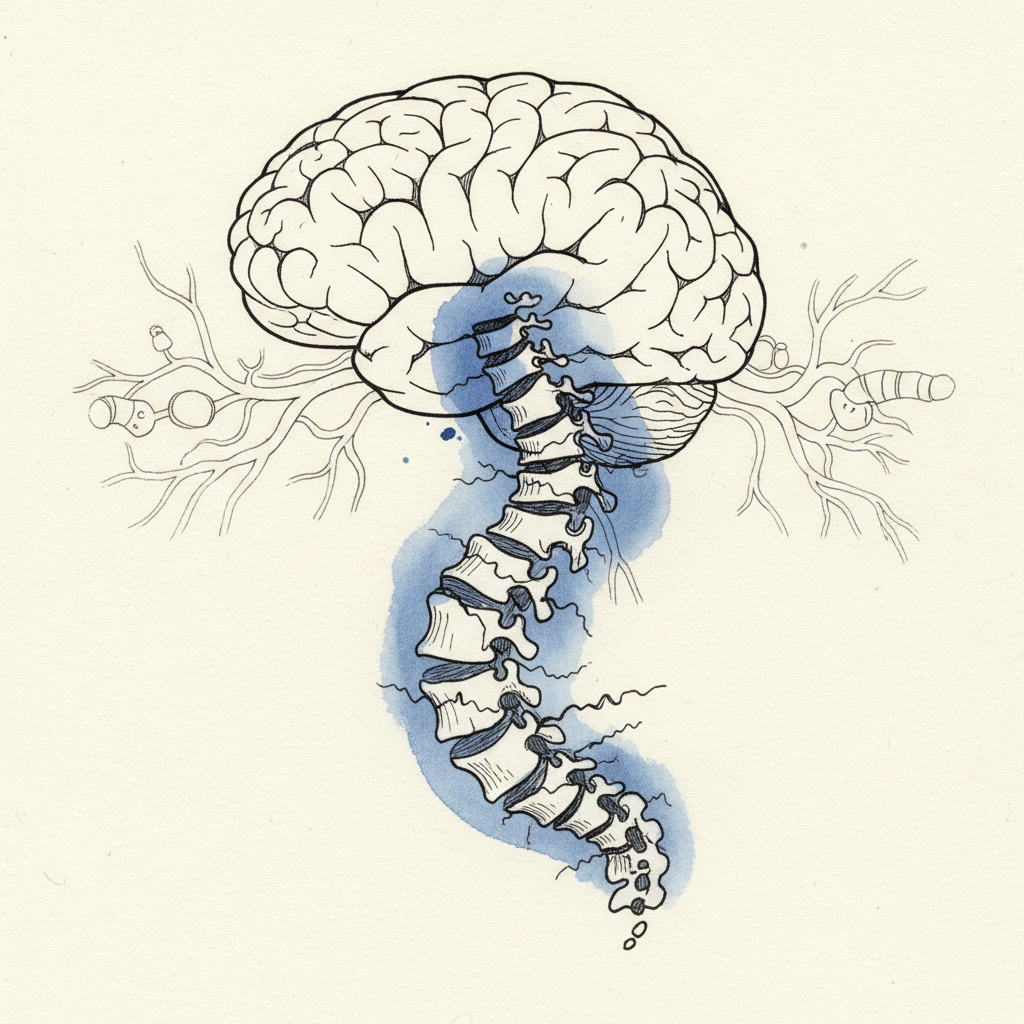
Each of these steps assumes the same thing: the curve is the problem.
It is not.
The most effective non-surgical scoliosis treatment targets the nervous system, not just the curve. Research in predictive neuroscience shows the brain maintains an internal model of the body called the body schema. In scoliosis, this model generates the lateral curve as a prediction based on sensory input it has received over years. Conventional approaches like bracing and corrective exercises address the curve’s shape without updating the prediction that generates it. This is why results plateau. Approaches that update the body schema through novel sensory input, gentle proprioceptive training, and cortical re-education (such as pandiculation and sensory discrimination exercises) show more durable results because they change the brain’s model, not just the body’s position. The best non-surgical scoliosis treatment changes the prediction, not just the posture.
The 2013 BrAIST study confirmed that bracing reduces curve progression in adolescents with idiopathic scoliosis [5]. This is real. Bracing works at the mechanical level.
But it does not update the body schema. It constrains the output while the generator remains untouched. This is why curves progress after bracing ends. The prediction is still running.
Physical therapy follows the same logic. Strengthen the weak side. Stretch the tight side. Mobilize the stiff segments. Each instruction targets the output. None of them target the model producing the output.
The lateral deviation is a prediction being run by a brain that cannot locate itself in three-dimensional space. Correcting the curve position without changing the inputs is correcting the output without updating the model.
This is not a criticism of the people doing the work. They are working inside a model that treats the body as a mechanical system. The model is the problem. Not the practitioners.
What the Body Schema Is and Why It Matters for Scoliosis
Your brain does not wait for you to decide how to stand. It runs a continuous prediction about your body’s position in space [1][11]. This prediction is the body schema. A dynamic, constantly updating map that generates motor output in real time.
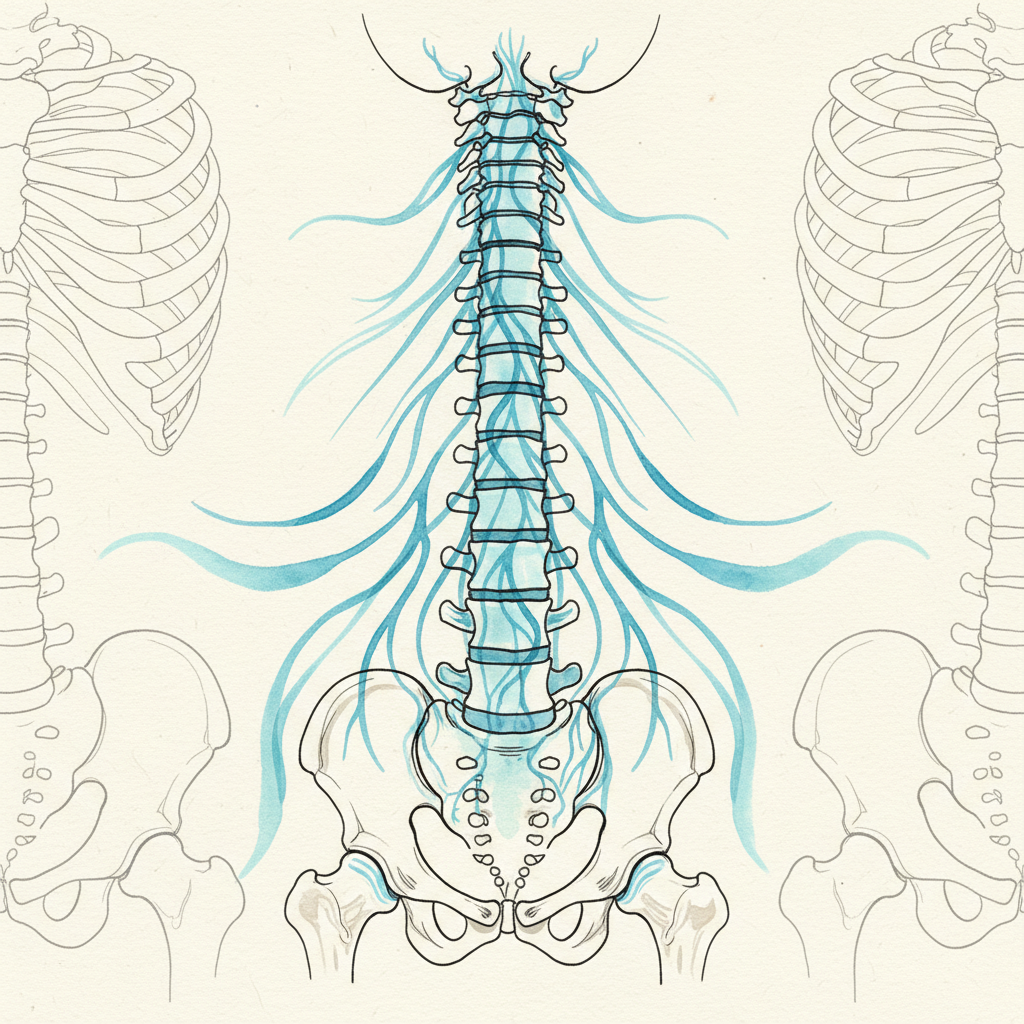
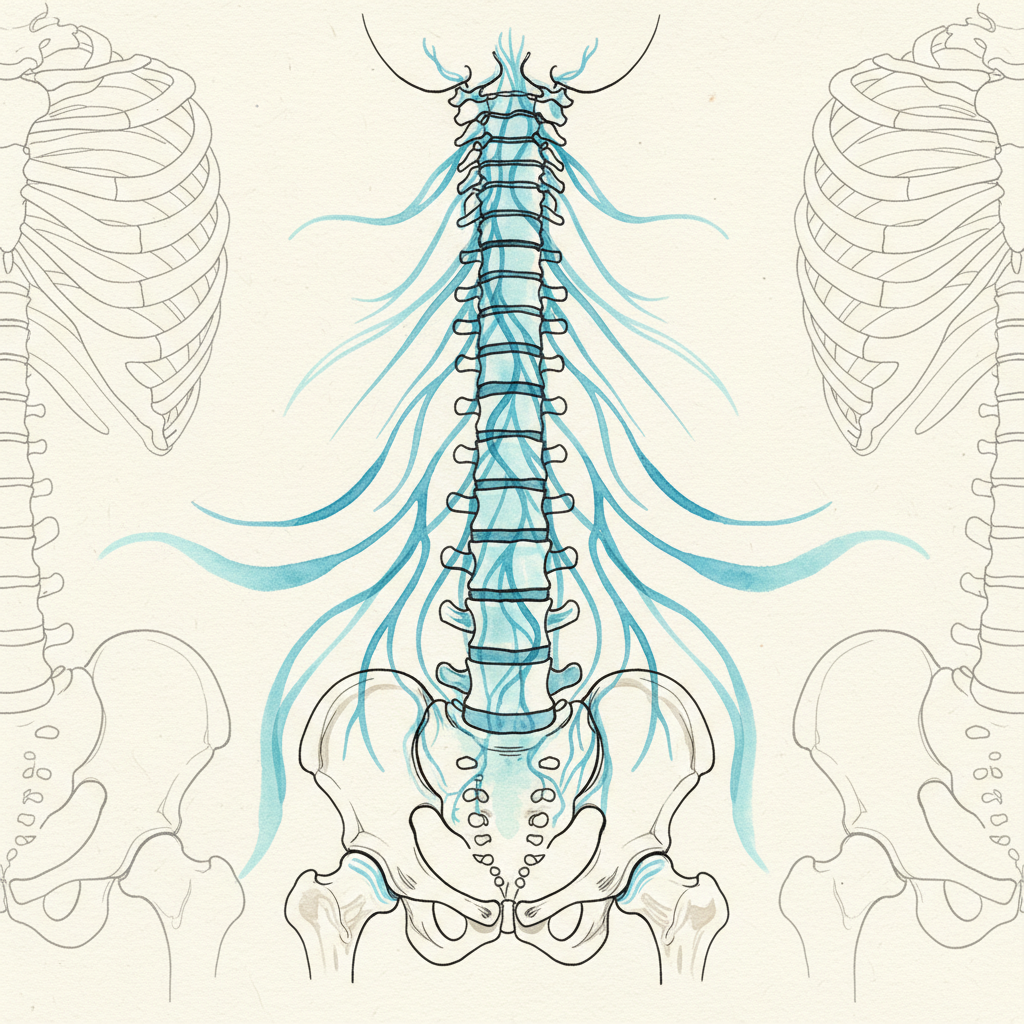
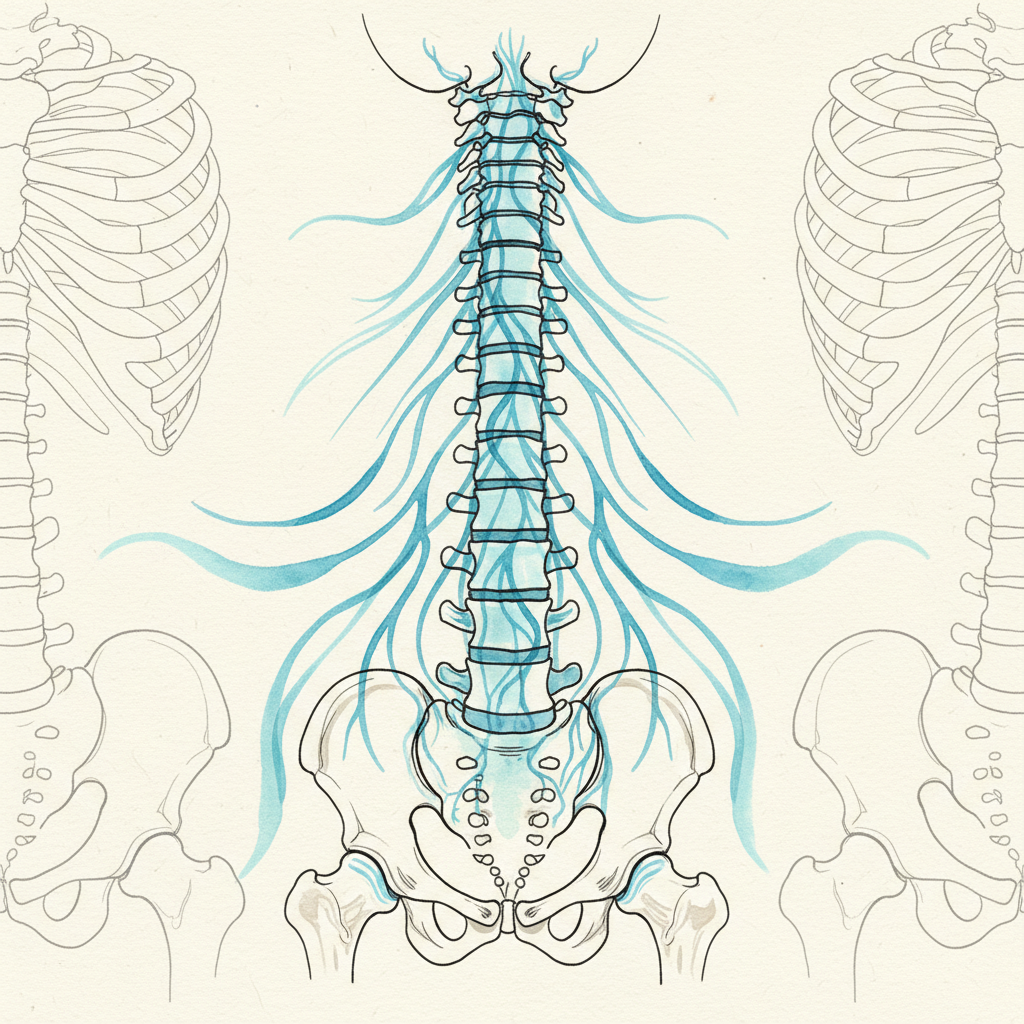
Where your shoulders sit. How your ribcage rotates. What angle your pelvis tilts. All outputs of the schema, not independent structural features.
The body schema is a non-conscious internal model the brain maintains of the body’s position, shape, and capabilities in space. First described by neurologist Jacques Paillard, the body schema is distinct from body image (what you see in the mirror). In scoliosis, the body schema generates the lateral curve as its best prediction given the sensory input it receives. The curve is not just a structural deformity. It is what the brain believes the body should look like based on years of sensory data. This explains why forced correction triggers protective resistance: the nervous system interprets externally imposed change as a threat to its current model. Treatment approaches that update the body schema through proprioceptive training, cortical re-education (pandiculation), and sensory discrimination exercises work with the nervous system rather than against it, producing changes that the brain’s model actually incorporates.
The body schema lives in the parietal cortex [2]. Somatosensory input and cerebellar input converge there, answering one question continuously: where am I?
This is why “sit up straight” fails. The instruction lands at the motor cortex. The executor. But the prediction governing what the executor runs comes from the parietal cortex above it. You cannot override the schema by instructing the executor.
In scoliosis, the model has learned to generate a lateral curve. Not because the spine is broken. Because the sensory data feeding the schema told the brain that this organization was the best available response to a perceived threat the system detected years or decades ago.
Scoliosis is not a structural deformity that needs mechanical correction. It is a prediction your nervous system generates based on a body schema that learned to organize around perceived threat.
That is not philosophy. That is the predictive coding framework, supported by research from Karl Friston on the free-energy principle [1] and Andy Clark’s work on the predictive brain [11]. Your brain is a prediction machine. Posture is one of its predictions. Scoliosis is a prediction that became self-reinforcing.
Why Your Brain’s Map Blurs (And What That Means for Treatment)
There is a measurable phenomenon in chronic pain and scoliosis research called cortical smudging.
When you have lived in a scoliotic pattern for years, the somatosensory cortex loses resolution at the trunk [8][12]. The brain’s map of your torso becomes coarse. Blurry. You lose the ability to feel distinct regions of your back.
This is testable. Two-point discrimination testing measures the brain’s ability to distinguish two separate touch points on the skin. In chronic back pain and scoliotic populations, this ability is significantly degraded at the trunk.
Lorimer Moseley’s research established that this blurring is not a minor inconvenience [8]. It is a primary driver. When the brain’s map degrades, the motor output degrades with it. Tsao and Hodges showed the same pattern from the motor side: in recurrent low back pain, the motor cortex map for trunk control degrades [9].
Your brain’s sensory map of the trunk has blurred. Its motor map has degraded. And you are being asked to strengthen and stretch your way out of the curve. The resolution is not there. The signal is not there. The map is not there.
Treatment that works must restore the map first. You cannot produce organized output from a degraded input. Sensory discrimination training restores resolution: gentle, attention-rich practices that ask the brain to feel and distinguish regions of the trunk it has stopped mapping.
This is why gentle approaches produce structural change that forceful approaches cannot. The force bypasses the map entirely. The gentleness rebuilds it.
The Safety Problem: Why Forced Correction Backfires
Before the brain can update its body schema, one condition must be met. The nervous system must feel safe.
This is not a soft concept. It is a hard neurological constraint.
Scoliosis can be treated without surgery, and research increasingly supports nervous system approaches alongside traditional conservative care. The 2013 BrAIST study confirmed bracing reduces curve progression, and SOSORT guidelines recommend exercise-based treatment. But the missing piece in most programs is the body schema: the brain’s internal model that generates posture as a prediction. When this model generates a lateral curve, mechanical correction alone cannot override it permanently. Sensory Motor Amnesia, a condition where the brain loses voluntary control of chronically held muscles, is measurable in scoliosis patients through two-point discrimination testing. Treatment that restores cortical representation of the trunk, reintroduces novel proprioceptive input, and works within the nervous system’s safety hierarchy produces changes that hold because the prediction itself has updated, not just the position.
Stephen Porges’s polyvagal theory established that the nervous system runs a [safety hierarchy](/safety-hierarchy-neural-architecture) [3]. When the system detects threat, higher functions shut down. The brain narrows its processing. It braces. It protects. It does not update.
This is the biological reason forced correction fails. Not because the force is too small. Because the force is a threat signal.
When you try to correct your posture, you generate a motor command. That motor command creates what neuroscience calls an efference copy: the brain’s prediction of the sensory outcome of its own action. Efference copy cancellation means the brain ignores sensory input that matches its own predictions. You feel nothing new. The schema does not update.
Three conditions must be met for the body schema to update: sufficient precision in the sensory signal, an open threat filter, and no efference copy cancellation.
Forcing the structure violates all three.
This creates a paradox most scoliosis patients have lived inside for years. The [harder you try to fix your posture](/trying-harder-fix-posture-worse), the less your brain receives the information it needs to actually change. The fastest way to change your posture is to stop trying to change your posture and start giving your nervous system the conditions it needs to update its own model.
Safety first. Sensation second. Movement third. You cannot skip levels. The sequence is non-negotiable.
What Non-Surgical Scoliosis Treatment Actually Looks Like
Treatment built on the body schema model follows the nervous system’s own priority sequence. Not the sequence that seems logical to the mechanical model. The sequence the biology demands.
Step one: Safety. The nervous system’s threat filter must open before new sensory information can reach the body schema. This is not relaxation. It is not meditation. It is a specific neurological state where the brain shifts from protective processing to receptive processing. You feel it as a softening. The jaw unclenches. The breath drops lower. The belly moves. That is the gate opening. If the system is braced, nothing gets through.
Step two: Sensory discrimination. Restore the brain’s ability to feel and map the trunk. This is cortical rehabilitation, not tissue treatment. Gentle tactile input. Slow, precise movement that asks the brain to distinguish regions it has stopped differentiating. Two-point discrimination improves. The map sharpens. The brain begins to receive accurate data from the body for the first time in years.
Step three: Pandiculation. This is the most clinically validated intervention in this approach, and the one that requires the most precise explanation.
Pandiculation is not stretching. It is the opposite of stretching.
Thomas Hanna identified a phenomenon called Sensory Motor Amnesia [4]: the brain loses voluntary control of muscles that have been chronically contracted. The muscles are not tight because they are short. They are held because the brain has lost the cortical map for releasing them. The brain forgot how to let go.
Pandiculation reverses this through three phases [7]. First, you voluntarily contract the chronically held muscle group. This is the critical step. By voluntarily engaging the contraction, the brain regains cortical access to that muscle. The motor cortex lights up. The brain remembers the muscle exists.
Second, you release the contraction with extreme slowness and full sensory attention. This slow release is the new map data. The brain receives proprioceptive input about what the muscle’s resting length should actually be. Not a stretch imposed from outside. A release monitored from inside.
Third, you rest. The nervous system integrates the new information.
Hanna’s clinical data showed significant pain reduction in under three sessions using pandiculation-based protocols [4]. The mechanism is cortical re-education: the brain’s map updates, and the motor output changes because the model changed.
Scoliosis exercises stop working when they address muscles without addressing the nervous system prediction that controls those muscles. The brain generates posture through an internal model called the body schema. In scoliosis, this model runs a lateral curve as its default prediction. Strengthening exercises, stretching, and manual correction can temporarily override the output, but the prediction reasserts within hours or days. This is not a failure of effort. It is the nervous system functioning exactly as designed: the brain’s model is more persistent than any mechanical intervention applied against it. For exercises to produce lasting change, they must generate prediction errors, sensory signals the brain did not expect, which force the body schema to update. This requires novel input, gentle awareness, and the nervous system feeling safe enough to accept new information.
Step four: Integration through organized pressure. Once the map has sharpened and the cortical access has been restored, the trunk can begin to organize pressure differently. The diaphragm is the primary anticipatory postural stabilizer. In scoliosis, the diaphragm’s excursion is asymmetric because the body schema’s prediction is asymmetric. As the schema updates, the diaphragm begins to descend more symmetrically. Intra-abdominal pressure distributes more evenly through the torso.
We call this the Dragon. Not because it is metaphor. Because when you feel organized pressure moving through your torso for the first time, the word “exercise” does not cover it.
This organized pressure wave is what DNS research from Pavel Kolar describes as the developmental stabilization pattern. Babies organize this pattern in their first year. It is not something you learn. It is something your nervous system already has the architecture for. Treatment re-accesses the pattern that was abandoned or never fully organized.
The Hierarchy of Scoliosis Exercises (Ranked by Body Schema Impact)
Not all [scoliosis exercises](/scoliosis-exercises-that-actually-work) are equal. And the difference is not intensity or muscle group. The difference is the level of the nervous system each exercise addresses.
Here is the hierarchy, ranked from highest body schema impact to lowest:
1. Pandiculation and cortical re-education. Directly addresses the motor cortex map. Restores voluntary control of chronically held muscle patterns. Updates the schema from the inside. This is the highest-impact intervention because it changes the prediction itself.
2. Proprioceptive training and [Schroth](/schroth-method-what-it-gets-right)-based rotational work. Schroth exercises rank higher than general strengthening because they include sensory discrimination. Rotational breathing with mirror feedback asks the brain to distinguish between left and right trunk. The brain receives new proprioceptive data. The map updates. The breathing repatterns as a secondary effect, something that directly impacts the [respiratory difficulties many people with scoliosis experience](/scoliosis-breathing-problems).
3. Developmental positions from DNS. Restoring the positions and transitions the body uses during the first year of life reactivates the stabilization sequences the nervous system already contains. These are not arbitrary exercises. They are the biological templates for trunk organization.
4. General strengthening. Addresses muscle capacity but does not update the prediction. The muscles get stronger, but the pattern they are being asked to reinforce is still the scoliotic pattern. Better than nothing. Not sufficient alone.
5. [Stretching](/why-stretching-doesnt-fix-posture) and mobilization. Addresses tissue length without updating the model. The stretch feels good. The brain does not change its prediction. The tissue returns to its held position within hours because the cortical map for that muscle has not updated.
6. Bracing. Mechanically constrains the output. Does not address the generator. The prediction continues to run inside the brace. When the brace is removed, the prediction reinstates.
The pattern is clear. The higher up this hierarchy you work, the more durable the change. The lower you work, the more temporary the result. This is not opinion. It follows directly from the neuroscience of how the body schema generates and maintains postural predictions.
This hierarchy also explains why [posture keeps going back](/why-posture-keeps-going-back) when lower-tier interventions are used, and why anxiety, jaw tension, and other nervous system patterns often shift alongside the curve. They are all outputs of the same prediction model. When you update the model, you do not just change the spine. You change the entire prediction.
Why This Approach Produces Changes That Hold
The dropout problem in scoliosis treatment is real. People start programs, see partial results, plateau, and quit.
The mechanical model says they did not try hard enough. The body schema model says the treatment was asking them to fight their own nervous system. Of course they quit. Forced correction is aversive. The body resists. The patient interprets resistance as personal failure. This is not a motivation problem. It is a design problem in the treatment itself.
Non-surgical scoliosis treatment built on the body schema model follows the nervous system’s own priority sequence: safety first, then sensory updating, then movement. The first step is establishing nervous system safety so the brain’s threat filter opens and allows new sensory information through to the body schema. The second step is sensory discrimination: restoring the brain’s ability to feel and map the trunk, which is measurably degraded in scoliosis (cortical smudging). The third step is pandiculation, a neurological reset where you voluntarily contract a chronically held muscle, then release it with full sensory attention, giving the brain new data about what that muscle’s resting tone should be. The fourth step is integration through gentle movement that reinforces the updated prediction. This is not passive. It requires active participation. But it is not forced correction. It is the brain updating its own model from the inside.
When treatment works with the nervous system instead of against it, three things happen.
First, the changes hold. The prediction itself has updated, not just the position. The brain’s model now generates a different output as its new default.
Second, the changes generalize. Updating the body schema changes how the brain organizes the trunk in all positions. Standing. Sitting. Walking.
Third, the patient does not resist. Gentle, curiosity-based work does not trigger the threat response that forced correction triggers. People continue because it makes sense in their body. Not because they are disciplined. Because the approach works with the system, not against it.
This is what I found in my own body. Not discipline. Not force. A different relationship with the nervous system that generates the curve. The curve was never the enemy. The model producing it was the thing that needed updating.
Frequently Asked Questions
Can scoliosis be treated without surgery?
Yes. The SOSORT guidelines recommend exercise-based conservative treatment [6], and the BrAIST study confirmed non-surgical approaches reduce curve progression [5]. The body schema approach goes further by targeting the nervous system prediction that generates the curve. Surgery addresses the structure. This approach addresses the generator of the structure. The question is whether the generator has been addressed before surgical options are considered.
Why do scoliosis exercises stop working after a while?
They address the output (muscle, position, curve) without updating the input (the body schema prediction). The brain’s model is more persistent than any mechanical intervention applied against it. The exercises temporarily override the output. The prediction reasserts. For exercises to produce lasting change, they must generate prediction errors that force the schema to update.
Is it too late to treat scoliosis without surgery as an adult?
The brain retains neuroplasticity throughout life. Cortical maps can sharpen at any age. Sensory Motor Amnesia can be reversed at any age. The body schema can update at any age. What changes with age is not the capacity for neural updating. It is the accumulated years of reinforcement the current prediction has received. Treatment takes longer. The mechanism still works.
—
About the author: Sam Miller is the creator of Syntropic Core and founder of Posture Dojo. Diagnosed with an 85-degree scoliosis at 18, he spent two decades mapping the nervous system mechanisms that conventional treatment misses. He works with people whose bodies did not respond to the standard playbook. His approach is built on the predictive neuroscience of posture, not the mechanical model that failed him.
Ready to go deeper? [Learn about Syntropic Core Reset](https://syntropiccore.com) and discover what treatment looks like when it targets the prediction, not just the curve.
Sources
- Friston, K. (2010). The free-energy principle: a unified brain theory? Nature Reviews Neuroscience, 11(2), 127-138. [T1]
Predictive coding: the brain generates posture as a prediction, not a position. Scoliosis as a prediction error the brain is running, not a structural defect. - Paillard, J. (1999). Body schema and body image: a double dissociation in deafferented patients. In G.N. Gantchev, S. Mori, & J. Massion (Eds.), Motor Control, Today and Tomorrow (pp. 197-214). Sofia: Academic Publishing House. [T1]
Body schema as the non-conscious sensorimotor model that generates posture. The distinction between the schema (what generates the curve) and the image (what the patient sees in the mirror). - Porges, S.W. (2011). The Polyvagal Theory: Neurophysiological Foundations of Emotions, Attachment, Communication, and Self-Regulation. W.W. Norton. [T1]
Safety hierarchy: why the nervous system must feel safe before it can update its postural prediction. Explains why forced bracing triggers protective bracing rather than correction. - Hanna, T. (1988). Somatics: Reawakening the Mind’s Control of Movement, Flexibility, and Health. Da Capo Press. [T1]
Sensory Motor Amnesia: the brain loses voluntary control over chronically held muscles. The cortical map degrades. Pandiculation as the mechanism for cortical re-education. - Weinstein, S.L., et al. (2013). Effects of bracing in adolescents with idiopathic scoliosis. New England Journal of Medicine, 369(16), 1512-1521. [T1]
BrAIST study: bracing reduces curve progression but does not address the nervous system prediction generating the curve. - Negrini, S., et al. (2018). 2016 SOSORT guidelines: orthopaedic and rehabilitation treatment of idiopathic scoliosis during growth. Scoliosis and Spinal Disorders, 13, 3. [T1]
Conservative treatment guidelines. Exercise-based approaches are recommended but the mechanism through which they work is debated. - Bertolucci, L.F. (2011). Pandiculation: nature’s way of maintaining the functional integrity of the myofascial system? Journal of Bodywork and Movement Therapies, 15(3), 268-280. [T2]
Pandiculation as neurophysiological mechanism. Voluntary contraction-release cycle resets cortical motor control. - Moseley, G.L., & Flor, H. (2012). Targeting cortical representations in the treatment of chronic pain. Neurorehabilitation and Neural Repair, 26(6), 646-652. [T1]
Cortical smudging: the brain’s map of the body degrades in chronic conditions including scoliosis. Treatment must target the map, not just the tissue. - Tsao, H., Galea, M.P., & Hodges, P.W. (2008). Reorganization of the motor cortex is associated with postural control deficits in recurrent low back pain. Brain, 131(8), 2161-2171. [T1]
Motor cortex reorganization in chronic postural dysfunction. The brain’s motor map for the trunk degrades. - Cobb, J.R. (1948). Outline for the study of scoliosis. Instructional Course Lectures, American Academy of Orthopaedic Surgeons, 5, 261-275. [T1]
Cobb angle measurement: the standard for quantifying scoliosis severity. - Clark, A. (2015). Surfing Uncertainty: Prediction, Action, and the Embodied Mind. Oxford University Press. [T1]
Predictive processing framework: the brain as prediction machine. Posture is a prediction, not a position. - Flor, H., et al. (1997). Phantom-limb pain as a perceptual correlate of cortical reorganization following arm amputation. Nature, 375, 482-484. [T1]
Cortical reorganization: the brain’s body map changes in response to chronic conditions.
Leave a Reply